Ceiling Baffles vs. Acoustic Rafts: Finding the Ideal Solution for Your Workspace

When planning or refurbishing a workspace, acoustics are often just as important as layout and lighting. Excessive noise and echo can make it difficult for employees to concentrate, communicate clearly, and work comfortably. Fortunately, there are effective ceiling solutions designed to manage sound within interior spaces. Two of the most commonly used options are acoustic ceiling baffles and acoustic rafts.
Both systems are designed to absorb sound waves and reduce noise levels, but they differ in structure, installation style, and the types of environments they suit best. While each can significantly improve the acoustic quality of a room, choosing the right option depends on factors such as ceiling height, the level of noise present, and the overall design of the space.
This guide explores the differences between ceiling baffles and acoustic rafts to help you decide which solution is most appropriate for your workplace.
What Are Acoustic Ceiling Baffles?
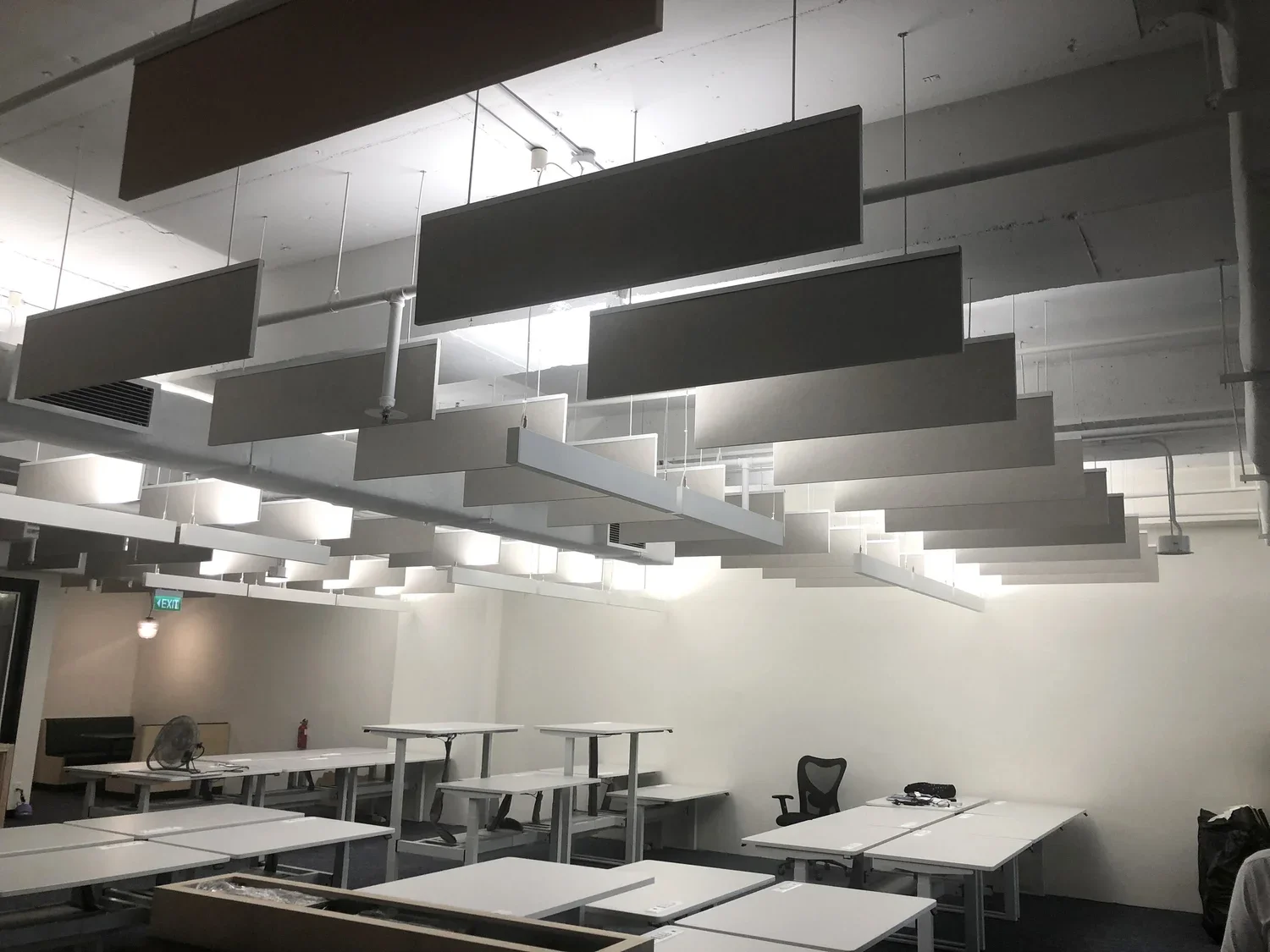
Acoustic ceiling baffles are vertical panels suspended from the ceiling, usually arranged in rows or patterns across the room. Because they hang vertically, they intercept sound waves travelling across large spaces and help reduce echo and reverberation.
These panels are particularly effective in buildings with high ceilings, where sound tends to travel freely and bounce between surfaces.
Benefits of Acoustic Ceiling Baffles
Ceiling baffles offer strong acoustic performance in large or open environments where sound reflections are common.
Their main benefits include:
Excellent sound absorption in large space
Improved speech clarity in open-plan offices
Reduced background noise and reverberation
Vertical placement that captures sound travelling between floors and ceilings
Flexible design options to match interior styles
This makes them especially useful in areas where noise levels are high or where sound travels across large distances.
What Are Acoustic Rafts?
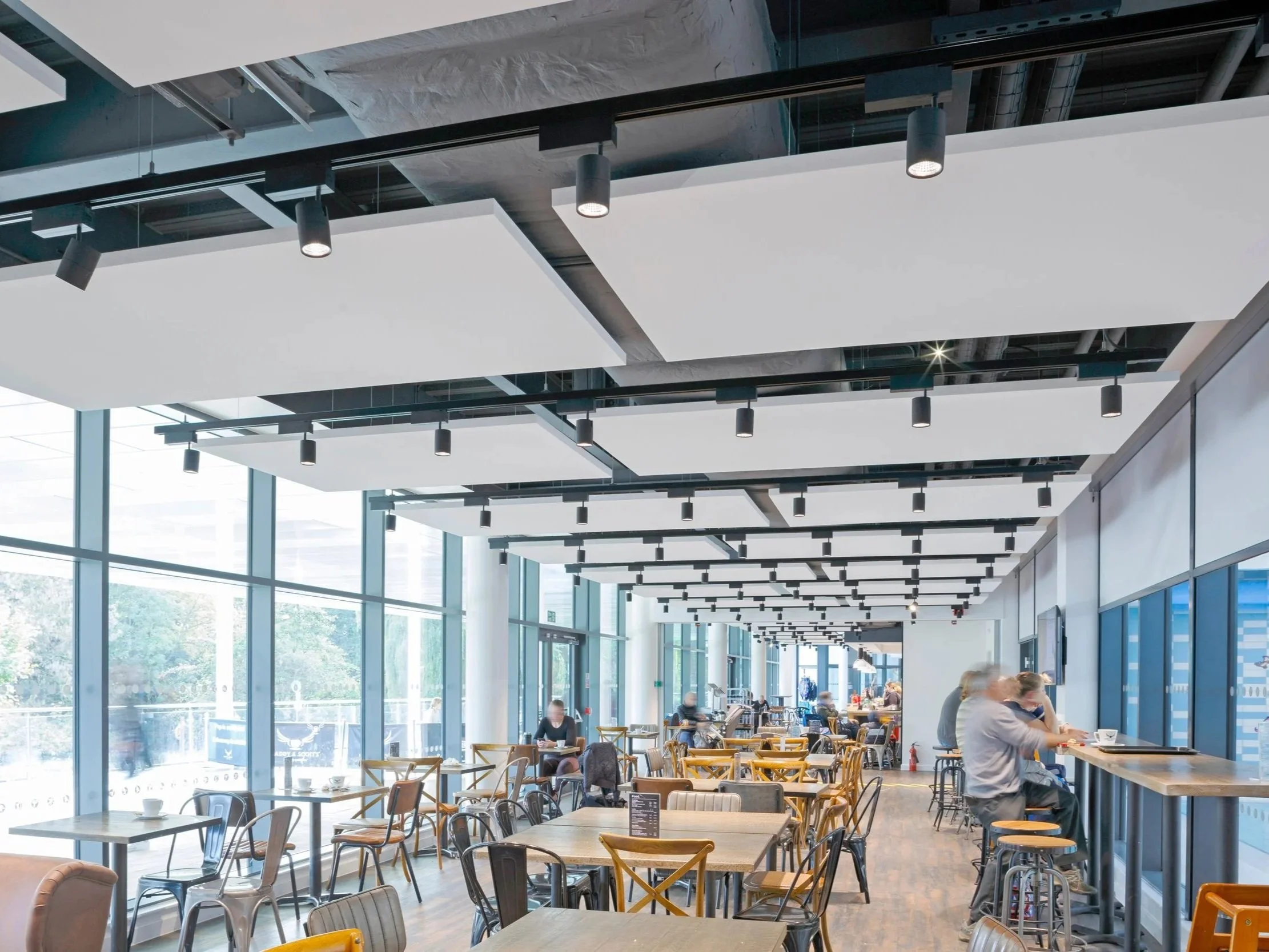
Acoustic rafts are flat panels suspended horizontally beneath the ceiling, often arranged in groups or decorative layouts. They resemble floating ceiling panels and provide sound absorption across a wider area.
Rather than targeting specific sound paths, rafts are designed to deliver consistent acoustic treatment throughout a room.
Benefits of Acoustic Rafts
Acoustic rafts provide a more evenly distributed approach to sound control and are often chosen for their understated appearance.
Advantages include:
Uniform sound absorption throughout the room
Effective for moderate noise reduction
Less visually intrusive in spaces with lower ceilings
Can assist with light reflection or cooling ceiling designs
Suitable where vertical clearance is limited
Rafts are often selected when both acoustic performance and a minimal design are priorities.
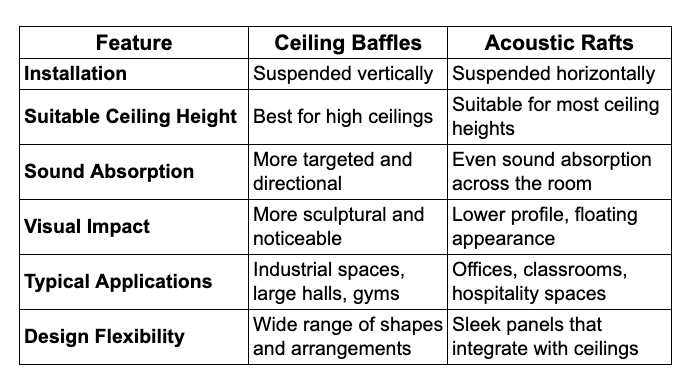
Key Differences Between Ceiling Baffles and Acoustic Rafts
Choosing the Right Acoustic Solution for Your Workspace
Selecting between baffles and rafts largely depends on the characteristics of the space.
Ceiling Height
Ceiling height is one of the most important considerations.
Higher ceilings (above roughly 3 metres): Ceiling baffles are often the better choice as they can hang freely without making the room feel crowded.
Lower ceilings: Acoustic rafts are usually preferable as they occupy less vertical space.
Acoustic Requirements
The type of noise present also plays a role.
Targeted sound control: Baffles work well in large open areas such as gyms, lecture halls, and conference spaces.
General noise reduction: Rafts provide consistent sound absorption in smaller rooms and offices.
Aesthetic Considerations
Both solutions contribute to the visual design of a space.
Baffles allow for creative arrangements, colours, and sculptural ceiling features.
Rafts offer a more subtle floating-panel appearance that blends easily with modern interiors.
Installation Considerations
Before installing acoustic ceiling systems, it is important to plan around other building elements. Points to consider include:
Integration with lighting fixtures
Clearance for sprinkler systems
Compatibility with HVAC systems
Appropriate spacing between panels for airflow and acoustic performance
Although installation can sometimes be carried out by experienced DIY enthusiasts, larger commercial spaces often benefit from professional installation.
Many manufacturers also provide digital planning tools and modular components, making it easier to design accurate acoustic layouts.
Materials Used in Acoustic Ceiling Treatments
Both baffles and rafts are typically made from sound-absorbing materials designed to reduce reverberation. Common materials include:
Recycled polyester acoustic cores
Wood or wood-fibre panels
Metal acoustic panels
Fabric or felt-covered surfaces
The material selected will influence both the acoustic performance and the visual character of the ceiling installation.
Typical Applications
Different environments may favour one solution over the other.
Open-plan offices: Baffles help manage noise in large collaborative areas
Meeting rooms and smaller offices: Rafts provide balanced sound absorption
Industrial facilities and gyms: Baffles cope well with louder and irregular sound sources
Retail and hospitality spaces: Rafts maintain atmosphere while discreetly controlling noise
Educational buildings: Both systems can be adapted for classrooms and larger halls
Pepperwall’s Acoustic Ceiling Baffle Solutions
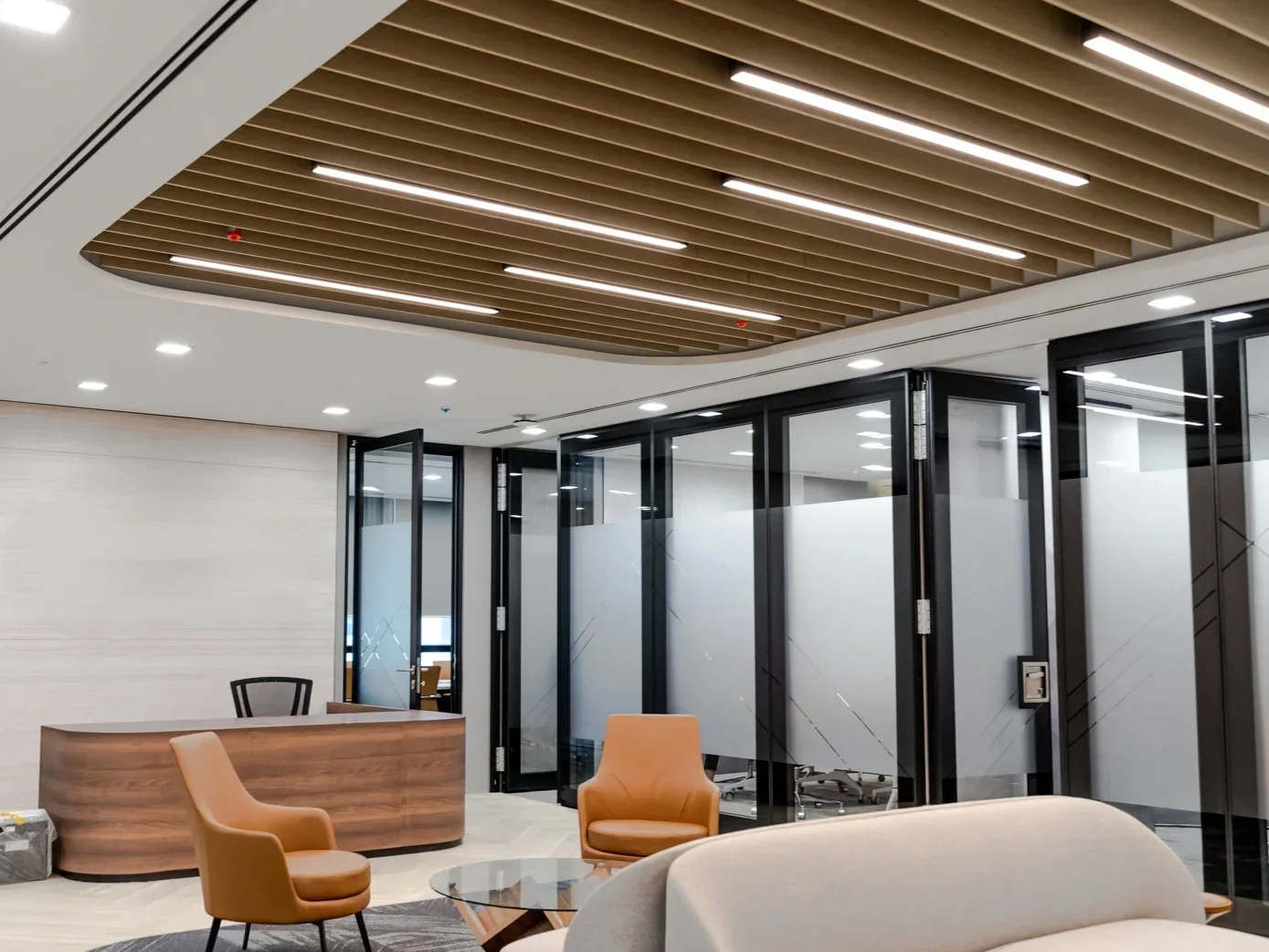
If you are looking to combine effective acoustic treatment with striking design, Pepperwall’s HEART® Acoustic ceiling baffles offer a versatile and modern solution.
These innovative acoustic systems are designed to transform ceilings into both functional sound-control elements and architectural features. Suitable for offices, educational facilities, retail environments, and commercial interiors, Pepperwall’s ceiling baffles enhance both the acoustic comfort and visual appeal of a space.
How HEART® Acoustic Ceiling Baffles Improve Your Space
Superior Sound Control
HEART® baffles absorb sound, reducing echo and background noise in offices, classrooms, and public spaces.Aesthetic Appeal
Pepperwall baffles combine performance and design, with various finishes to enhance modern interiors.Customizable Designs
Tailored to any space, with options for bold patterns or minimalist styles to match your vision.Improved Comfort and Productivity
By reducing noise distractions, baffles create a more focused, comfortable environment.Tailored Solutions
Pepperwall offers custom designs like Vessel 03, Interstellar, Polygon, and Waves, with customizable colors and textures for each project.
Pepperwall’s baffles are lightweight, easy to install, and made from durable materials for lasting performance. Learn more about Pepperwall ceiling baffles
Final Thoughts
Good acoustics are essential for a comfortable and productive workplace. By minimizing echo and background noise, acoustic ceiling treatments enhance communication, concentration, and overall wellbeing within a space.
Choosing between ceiling baffles and acoustic rafts depends on factors like ceiling height, noise levels, and the desired aesthetic. Baffles are ideal for large spaces with high ceilings and specific sound control needs, while rafts are better suited for areas requiring a subtle, evenly distributed acoustic solution.
By evaluating your workspace and selecting the appropriate acoustic system, you can create an environment that fosters both productivity and design excellence.
Need guidance on selecting the right acoustic solution? Chat with us directly on WhatsApp, and our team will be happy to assist you.
